Tankless vs. Tank Water Heater for Santa Rosa Homes (June 2026)
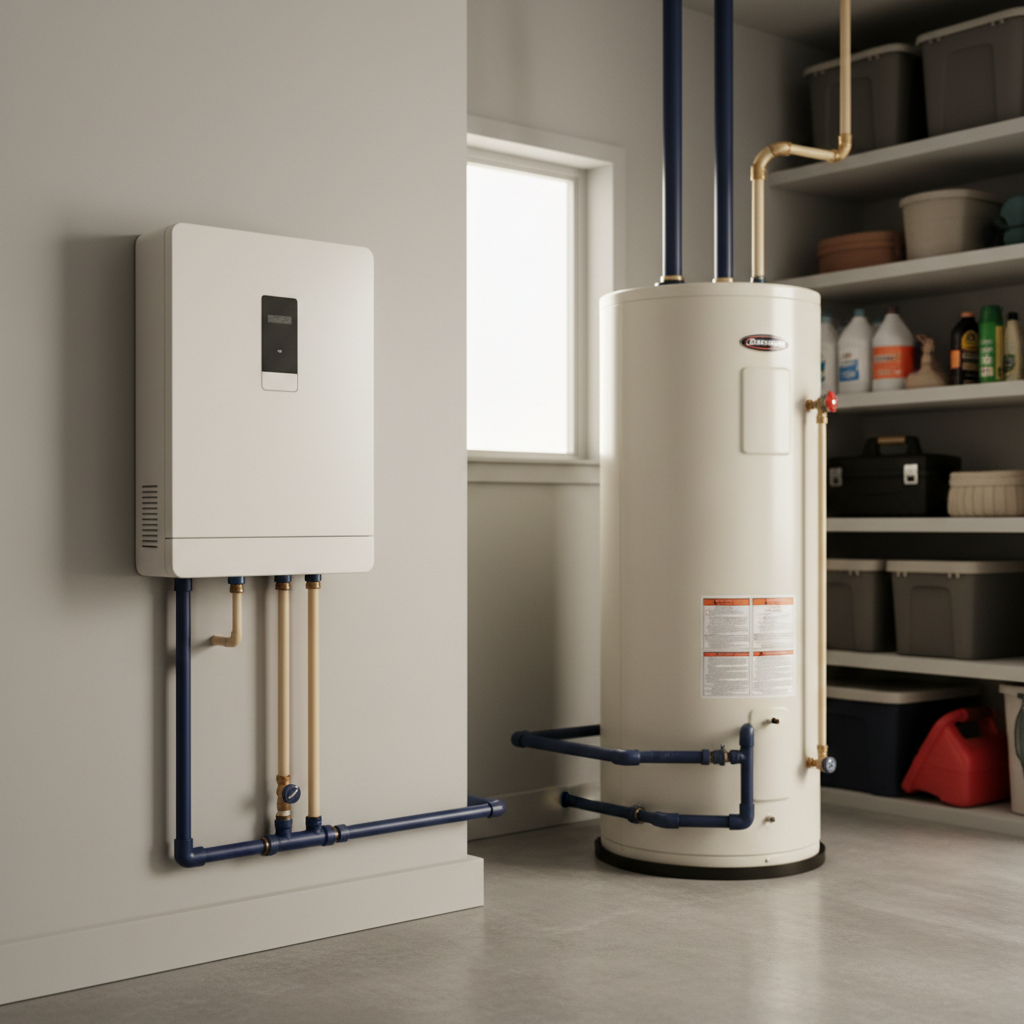
Choosing between a tankless and a traditional tank water heater for your Santa Rosa home involves weighing initial cost, energy efficiency, space requirements, and hot water delivery speed. Each system offers distinct advantages depending on your household's specific needs and budget.
Tankless vs. Tank Water Heater for Santa Rosa Homes: What's Right for You?
As of June 2026, homeowners across Santa Rosa, Windsor, Rohnert Park, and the wider Sonoma County area often find themselves at a crossroads when it comes to their home's hot water system. Whether you're replacing an aging unit, building a new home, or simply looking to upgrade for efficiency, the decision between a tankless water heater and a traditional storage tank model is a significant one. This choice impacts not only your immediate budget but also your long-term energy bills, home comfort, and even your carbon footprint.
There are valid reasons why both types of systems remain popular. What's best for a small cottage in Wikiup might be different from the ideal solution for a larger family home in Bennett Valley. Understanding the fundamental differences, advantages, and disadvantages of each system is key to making an informed decision for your Santa Rosa property.
Understanding Traditional Tank Water Heaters
Traditional tank water heaters are what most people are familiar with. They consist of a large insulated tank that stores and heats a set volume of water, typically ranging from 30 to 80 gallons. This water is kept at a consistent temperature, ready for use whenever a hot water faucet is opened.
How They Work: Cold water enters the tank and is heated by either a gas burner located at the bottom or electric heating elements inside the tank. A thermostat regulates the water temperature, turning the heating mechanism on and off as needed to maintain the desired heat. When you turn on your shower, hot water is drawn from the top of the tank, and cold water enters the bottom to be heated, a process known as the 'recovery rate.'
Pros of Tank Water Heaters:
- Lower Upfront Cost: Generally, the initial purchase and installation cost for a traditional tank water heater is less than a tankless model.
- Simpler Installation: Often, replacing an existing tank unit with a new one is a more straightforward process, especially if the new unit can utilize existing venting and utility connections.
- Reliable Hot Water Flow for Short Bursts: For typical household use, a tank system provides a strong, consistent flow of hot water until the tank is depleted.
Cons of Tank Water Heaters:
- Limited Hot Water Supply: Once the tank's hot water is used up (e.g., after multiple showers or running a washing machine and dishwasher simultaneously), you'll have to wait for the tank to reheat, which can take a while.
- Energy Inefficiency (Standby Heat Loss): Even when not in use, tank water heaters continuously heat the stored water, leading to energy waste through standby heat loss. This can be a significant factor in your utility bills.
- Larger Footprint: These units require considerable space for the tank itself, which can be an issue in smaller Santa Rosa homes or condos where space is at a premium.
- Shorter Lifespan: On average, traditional tank water heaters last 10-15 years, often requiring replacement sooner than tankless units.
- Risk of Leaks: As tanks age, corrosion can lead to leaks, potentially causing water damage. If you're noticing puddles around your unit, it could be time to consider a Water Heater Replacement.
Exploring Tankless Water Heaters for Santa Rosa Homes
Tankless water heaters, also known as on-demand water heaters, operate quite differently. Instead of storing hot water, they heat water directly as it flows through the unit when you need it. This innovative approach has gained significant traction for its energy-saving potential.
How They Work: When a hot water tap is opened, cold water travels through a pipe into the tankless unit. A powerful gas burner or electric heating element instantly heats the water to the desired temperature. The unit continuously produces hot water for as long as the tap is open, provided its flow rate capacity isn't exceeded.
Pros of Tankless Water Heaters:
- Endless Hot Water: This is perhaps the biggest draw. You'll never run out of hot water, regardless of how many showers are taken back-to-back or how long the dishwasher runs. This is a huge benefit for larger families or homes with high hot water demand.
- Significant Energy Savings: Because they only heat water when it's needed, tankless units eliminate standby heat loss, leading to considerable savings on energy bills. According to Energy Star, tankless water heaters can be 24%-34% more energy efficient than conventional storage tank water heaters for homes that use 41 gallons or less of hot water daily.
- Longer Lifespan: Tankless units typically last 20 years or more, often with easily replaceable parts, extending their operational life.
- Space-Saving Design: Their compact size allows them to be mounted on a wall, freeing up valuable floor space in utility closets, garages, or basements – a welcome feature in many Santa Rosa homes.
- Reduced Risk of Leaks: Without a large tank of stored water, the risk of a catastrophic leak or burst is significantly lower.
Cons of Tankless Water Heaters:
- Higher Upfront Cost: The initial purchase price and installation of a tankless water heater are generally higher than a traditional tank model. This cost can sometimes be offset by rebates or tax credits, so it's always worth checking local programs.
- Potentially Complex Installation: Converting from a tank to a tankless system can require upgrades to gas lines (for gas models), electrical wiring, and venting, which adds to the installation cost. A qualified plumber will assess your specific needs.
- Flow Rate Limitations: While they provide endless hot water, tankless units have a maximum flow rate. If multiple hot water appliances are used simultaneously (e.g., two showers and a dishwasher), the temperature or pressure might drop slightly if the unit is undersized for the demand. Proper sizing is crucial; an independent provider can help you assess your home's needs for a new Tankless Water Heater installation.
- Warm-Up Period: There's a slight delay from the moment you turn on the hot water tap until hot water actually reaches the fixture, as the water needs to travel from the unit to the faucet. This is often just a few seconds.
Which is Right for Your Santa Rosa Home: Tankless vs Tank Water Heater?
The ideal choice often comes down to a few key factors specific to your household and property in Sonoma County:
- Budget: If your immediate budget is tight, a traditional tank unit may be more appealing due to its lower initial cost.
- Energy Efficiency & Long-Term Savings: If you're focused on reducing utility bills and your environmental impact, a tankless unit offers significant long-term energy savings.
- Household Size & Hot Water Demand: Large families or those with high, simultaneous hot water needs will greatly benefit from the endless supply of a tankless system. Smaller households might find a well-sized tank unit sufficient.
- Space Availability: If you're short on space in your garage or utility closet, the compact design of a tankless unit is a clear advantage.
- Lifestyle: Do you often find yourself rushing to get ready, only to be frustrated by a lack of hot water? A tankless system can eliminate that common household frustration experienced by many in Santa Rosa and beyond.
- Existing Infrastructure: The condition of your current gas lines, electrical panel, and venting can influence installation costs and complexity for converting to tankless. A local plumbing provider can perform an assessment.
For most Santa Rosa homeowners looking to upgrade or replace an existing water heater, the long-term benefits of a tankless system often outweigh the higher initial investment, especially given the rising costs of energy. However, for a rental property or a second home with infrequent use, a conventional tank might make more financial sense upfront. It's always a good idea to consider your total cost of ownership over the expected lifespan of the unit.
If your current tank water heater is showing signs of age – such as inconsistent heating, strange noises, or leaks – it's time to consider options for Water Heater Repair or replacement before a full breakdown occurs.
Making the right decision between a tankless vs. tank water heater is an important home improvement. To get a personalized recommendation and reliable installation, you can be connected with an independent local plumbing provider right here in Sonoma County. They can assess your home's specific needs, discuss energy efficiency options, and provide a clear estimate for the best water heating solution for you.
Whether you're in Roseland, Coffey Park, or down in Cotati, making sure your home has a reliable hot water supply is essential for daily comfort. Don't hesitate to reach out to discuss your water heating needs.
Ready to explore your options for a new water heater? You can call (707) 361-9499 or request help via our website to be connected with a local plumbing provider who can help you make the best choice for your home.
Frequently asked questions
Are tankless water heaters really more energy-efficient?
Yes, tankless water heaters are generally more energy-efficient because they only heat water on demand, eliminating the standby heat loss associated with traditional tank units. This can lead to significant savings on your monthly energy bills, especially if your household uses more than 40 gallons of hot water per day.
How long do tankless water heaters typically last compared to tank models?
Tankless water heaters tend to have a longer lifespan, often lasting 20 years or more, while traditional tank water heaters typically last 10-15 years. The longer lifespan of tankless units can contribute to their value over time, despite a higher initial cost.
Can a tankless water heater supply enough hot water for a large family in Santa Rosa?
Yes, a properly sized tankless water heater can provide an endless supply of hot water for a large family. The key is to ensure the unit's flow rate (gallons per minute) is sufficient to meet your peak demand, such as multiple showers running simultaneously. An independent local plumbing provider can help determine the correct size for your home.
What are the main reasons someone in Santa Rosa would choose a tank vs. tankless water heater?
Homeowners often choose a traditional tank water heater due to its lower upfront purchase and installation cost. It can also be a simpler replacement if you already have a tank system. For those with tighter immediate budgets or lower hot water demands, a conventional tank can be a practical choice.
Is converting from a tank to a tankless water heater a complicated process?
Converting from a tank to a tankless water heater can be more complex than a direct tank-to-tank replacement. It might involve upgrading gas lines, electrical wiring, or venting systems to meet the demands of the new unit. An independent local plumbing provider in Santa Rosa can assess your home's existing infrastructure and provide a detailed plan and estimate for the conversion.
Editorial Team
The Plumbers Santa Rosa editorial team writes practical, locally focused plumbing guides for homeowners and property managers across Sonoma County.
Need a Plumber in Santa Rosa?
Skip the search. Call or request help to get connected with a local plumbing provider.